
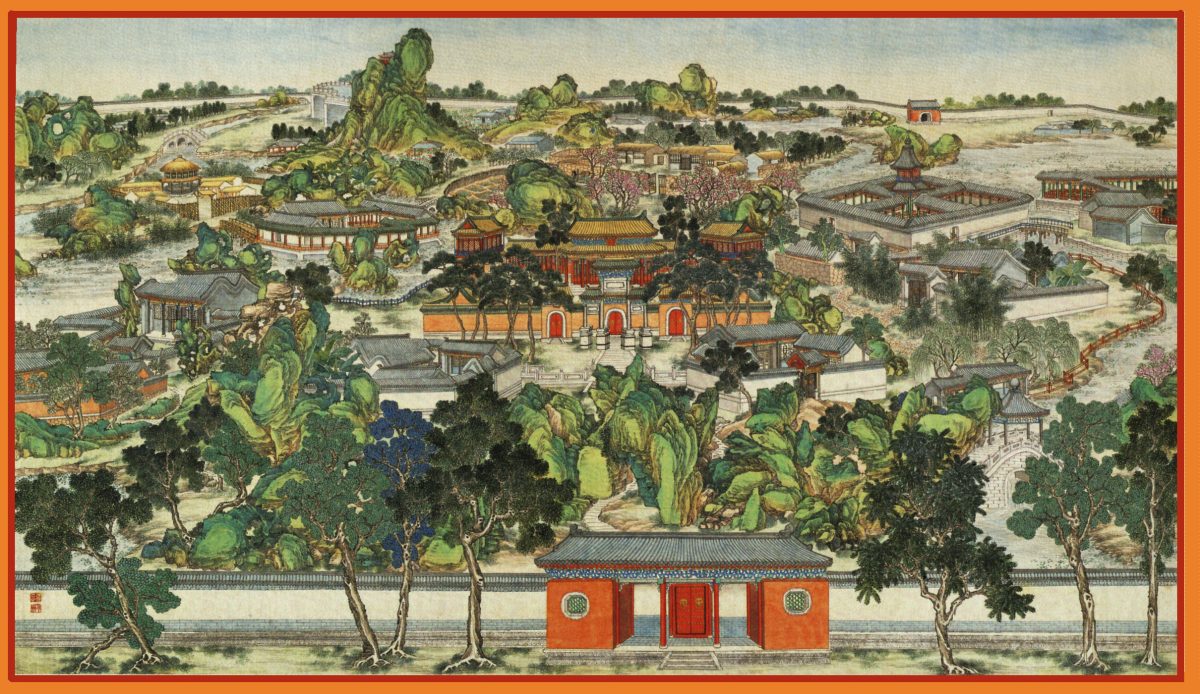
After reading the first 25 chapters, I really took interest to the themes that were presented in chapters 7-15. One of the major themes that jumped out at me was the role that social power and influence plays. Throughout these chapters both Bao- yu and Xi- feng have different outlooks on their power and influence.
In chapter 7 there is a scene where Bao-yu goes to the Ning mansion. During this scene he introduced to Chin Chung, Bao-yu feels ashamed because of his background coming from a wealthy, noble family. He sees that even though that Chin Chung is from an impoverished family he carries himself in a very civilized and attractive manner. Bao-yu loathes the social barriers that wealth and status have created that separate the two of them. However, he chooses to break and disregard this social barrier that has been laid in place by the ruling class. In a sense he is rejecting his social power and influence.
Q: In many of the other characters from the ruling class we see the abuse of their power and influence. Why do you think that Bao-yu is different? Why do you think that Bao-yu chooses to in a sense “reject” his nobility by befriending Chin Chung? What makes his character different from the others from the ruling class?
In chapter 11 we see that Xi-feng frequently goes to visit the sick Ko-ching. One day while she is leaving by a side gate, Jia Rui happens to see her. He becomes deeply attracted to her and begins to try to court her. Xi-feng does not have the same attraction to Jia Rui as he has to her. Xi-feng threatens to kill Jia Rui to let him know that she is a “strong and independent woman”. She yearns to demonstrate to that she has power, particularly power over Jia Rui. This scene shows that Xi-feng is driven by her power and influence. She wants to have power and to assert her femininity over Jia Rui. She does this because of her yearning to assert dominance and even if it means harm to another, in this case Jia Rui.
Q: Do you think that Xi-feng’s desire to assert power and dominance through her femininity is triggered by the social roles she currently has? Does she feel the need to assert her femininity because she feels like she lacks power? or is it an abuse of power she already has?
In chapter 12, we see the story between Xi-feng and Jia Rui unfold more. This chapter describes the traps that Xi-feng sets for Jia Rui. First, she tells him to sneak over in the night to her room. He does this and finds she is not there to let him in. He waits all night in the bitter cold and wind for her. She also tricks him into making love with Jia Qiang, and then uses this to blackmail him for money. These tricks take a toll on Jia Rui, he is confined to his bed with illness. He dies later in the chapter while looking at a vision of Xi- feng urging him to make love to her. Throughout this story we see how Xi-feng uses the attraction Jia Rui has for her to control him. Xi-feng wields this power over Jia Rui and uses her power to hurt and ultimately kill him.
Q: Besides trying to assert her dominance, do you think that there are any other reasons Xi-feng feels the need to ruin Jia Rui’s life? Do you think there is a reason she takes it to the extremes she does?
In chapter 14 we also see how Xi- feng misuses her family power to control those around her. As a result, these people are affected in negative ways. It is very clear through her actions that she acts out of selfish intentions. There seems to be a contrast between Bao-yu’s use of his social status and power in chapter 7, and Xi-feng’s use of her power and influence.
Q: After comparing and contrasting Bao-yu’s rejection of his nobility and power in chapter 7 and Xi-feng’s misuse of her power in chapters 11 and 14. Why do you think Cao Xueqin portrays Xi-feng’s and Bao-yu’s use of their social status and power so differently?
 The Story of the Stone