Chapters 26-36 Thoughts and Reflections

In chapters 26-36 we start to see a development of one of the novel’s main plots—the love triangle between Bao-yu, Dai-yu, and Bao-chai. At this stage, the characters are just beginning to come into their own sexuality and are starting to face the complications of adulthood. Bao-yu has experienced some personal losses and multiple shades of grief: in volume one, his dear friend Qing Zhong dies and leaves Bao-yu grieving, and in chapter 32 the maid Golden kills herself after a frightening interaction with Lady Wang.

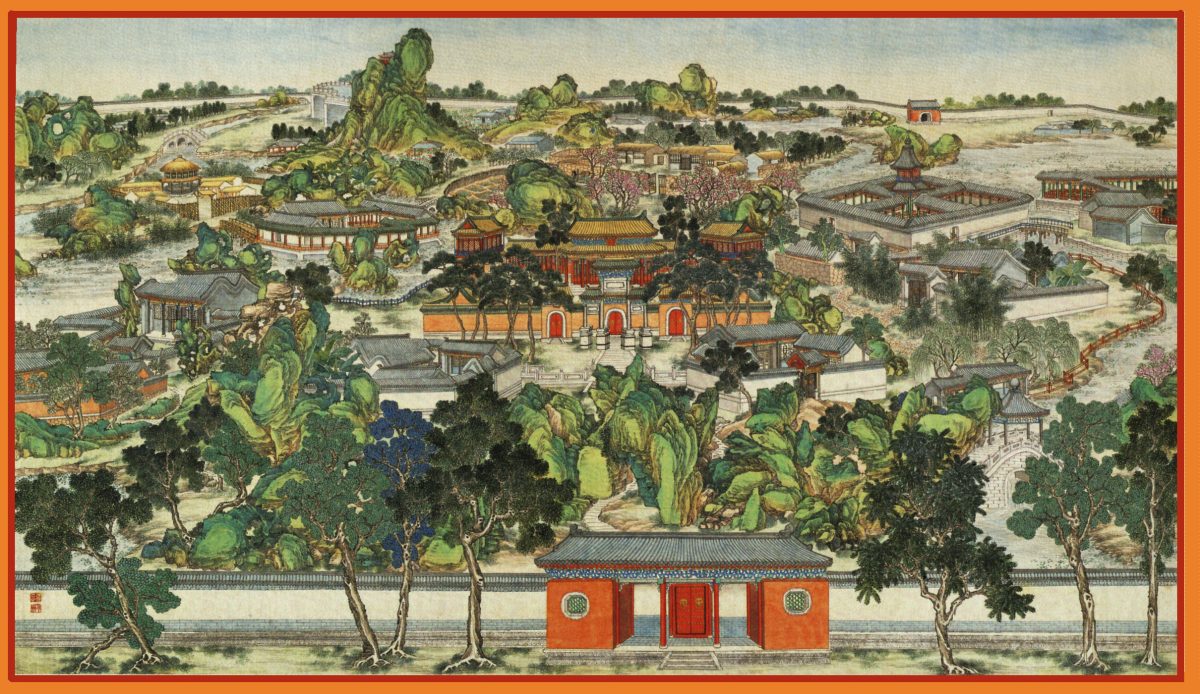
But many of the characters have also moved into the garden, reflecting both a transition into the complicated world of adulthood and a retreat (or possibly an expansion!) into a rich, insular, and protected natural world. These are the transformations that have most interested me while moving into the second volume. On that note:

  1. What do you make of the idea of the three adolescents beginning their transition to adulthood in this way? What is the significance of the move to the garden?
  2. Is there a relationship between Qin Zhong’s death and Golden’s suicide? Both Bao-yu’s and Dai-yu’s childhoods have so far been shaped by grief. How do you think these instances will continue to affect them?
  3. There seems to be some foreshadowing in the “gold and jade” connection between Bao-yu and Bao-chai. Bao-yu and Dai-yu have a long (albeit totally silent and almost telepathically charged) multi-layered conversation about this connection and Bao-yu’s love for Dai-yu. Do you think this “gold and jade” connection is more real or inevitable than this secret and unspoken connection?
  4. What is the garden’s role in shaping the events of the novel? How has the story (structurally, temporally, in terms of plot or story) changed since it was built?

Developing Research on Chinese Philosophy

My research is still in early stages, for when approaching topics such as philosophy and culture, it is unwise to make assumptions and take short cuts. These two topics are so rich and it is essential to understand the foundations before attempting to draw conclusions.

This being said, where my research has taken me is a development of basic understanding of Chinese schools of thought beginning with mythology and philosophy. In order to answer the question of why Chinese society places values on specific aspects of culture– such as a relationship with the environment– we must first discover the influence of divine thought.

The main philosophies that I have been researching are Confucianism, Daoism, and Buddhism. Each promote separate life values, thus will promote separate approaches to life. For the sake of the direction of my research, I have decided to refer to and research these as philosophies rather than religions. Before looking at any of these separately, it is important to note that we must avoid studying them through a western lense. Unlike Abrahamic religions that western society is typically more accustomed to, eastern thought is collective. These philosophies are in conversation with each other. Especially in Chinese society, it is common to see practices from each school of thought being carried out in one’s life. Belief and preference of one philosophy does not discredit the value of another. However, for the time being, I will be examining each independently.

Confucianism was born during 6th and 5th centuries B.C.E. during a time of political unrest in China. Confucius’ teachings focused heavily on morality and filial piety. He believed that good government should rule by moral example. Filial piety set the tone for all relations in China. To be “good”, one must follow the workings of filial piety and respect their elders and those in authority. In the fall I briefly studied Mengzi by Mencius, a famous philosopher on Confucianism. I will review this work to look for explicit examples of why Chinese society defines certain actions as “right” or “wrong”.

In Hong Lou Meng, we see the character Bao-chai portraying Confucian ideals. She addresses each person according to their role in society and the family. Her actions are focused on her development for her future roles, like being a wife. We can see this played out in her and Bao-yu’s relationship. For my research, I will begin to identify explicit scenes in which Bao-chai exemplifies Confucian ideals.

Daoist teachings focus heavily on “the way”– the path of nature. One may only flourish if “the way” or “the dao” is in balance. Daoism is directly connected to nature and can be more easily understood when thinking of a river. One can work to make things happen in their life, to change their life, but ultimately, the river will flow where the river flows. A person cannot simply change that path. Instead, they should embrace it. Alongside Mengzi, I studied Zhuangzi in the fall. This work has been of particular interest to me as I have formed my research. It is my hope that further studying of Zhuangzi and scholarly articles focused on Zhuangzi will lead my understanding of Chinese society and attitudes toward the environment.

In Hong Lou Meng, Dai-yu represents a Daoist lifestyle. She tends to follow instincts and whims rather than formal societal roles. While she may first appear to be immature and irrational, after recognizing the influence on Daoism on her character, her behavior gains depth. Daoism emphasizes following The Way, which is separate for each individual and is not a written path. It is focused more so on the moment– which is where we typically see Dai-yu’s mind. Her behavior is not tactically constructed around the future, rather it is reacting to the present.

Buddhism originated in India and traveled to China at some point after 300 B.C.E. I am somewhat familiar with Thai Buddhism, so trying to differentiate between the two branches (Thai Buddhism and Chinese Buddhism) has been a bit of a learning curve. The main teachings of Buddhism are that one must follow the Eightfold Path in order to reach Nirvana. This process includes karma and reincarnation whilst one works toward enlightenment. Buddhism focuses on removing desire to remove suffering. My research on Chinese Buddhism is the most underdeveloped presently. I have yet to identify specific supplemental works to assist in this area of thought and will need to search for areas in which it is represented in Hong Lou Meng.

A resource shared with me by our partners in China provided a chapter with multiple Chinese legends. This chapter, “Chinese Historical Tales, Myths, Fables and Legends” provided around forty stories that can be applied to various aspects of life. The myths that I am particularly interested in investigating further or that may support my research are “The Creation of the Earth,” regarding Pangu; “Nu Wa Made Man” and “Nu Wa Mended the Sky”; “Jing Wei Tries to Fill the Sea with Pebbles”; “Da Yu Led People Curbing Floods”; “To Help the Shoots by Pulling them Upward”; and “When the Man on the Frontier Lost His Mare, He Guessed it Was a Blessing in Disguise”. I also found a video explaining very basic Chinese mythology, which speaks more on Pangu which I will link here: https://youtu.be/G7vget_QAmo. I have yet to identify specific areas in which these mythological thoughts have been represented in Hong Lou Meng.  

As previously stated, Chinese philosophies are in conversation with one another. It is more likely to see a hybrid practice of the three main schools of thought, Daoism, Confucianism, and Buddhism, rather than practiced individually. As they relate to our main vehicle of study, Hong Lou Meng, I plan to emphasize my study on Daoism and Confucianism as they are more prevalent in the work. I am especially interested in researching more on Daoism due to its direct connection to nature.

Asianetwork Grant Guidelines

All,

Find below links to documents pertaining to our pre-trip, trip, and post-trip program per Asianetwork guidelines.

SFF 2019 Recipients & Project Abstracts

SFF Core Ideas

SFF 2019 Post-Trip Activities Guidelines

SFF 2019 Policies & Guidelines

SFF 2019 Mentor Contact Info

SFF 2019 Instructions for Preliminary Reports

SFF 2019 Instructions for Final Reports

SFF 2019 Grant Administration Guidelines


Chapter 27-36 Questions – Madeline Derango

In chapters 29-30, the author describes a major fight that broke out between Bao-yu and Dai-yu; in fact, the fight got so bad that Dai-yu ripped the tassels off the jade amulet, breaking into a fit of vomiting and crying. Although the two eventually make up in Chapter 30, these chapters continue to have characterize deep, yet psychologically excruciating, relationship between Bao-yu and Dai-yu. In Chapter 32, Bao-yu expresses his favoritism of Dai-yu, noting that she doesn’t waste her time with trivial nonsense. What do you think the author is trying to show with the development of their relationship in these chapters? How does it compare with the development of Ba0-yu and Bao-chai’s relationship development in these chapters?

In Chapter 30, Lady Wang strikes a maid -Golden- after Bao-yu begins flirting with her. Although the author notes that this is the first time Lady Wang hit a maid, the author notes that “it was the uncontrollable anger of the morally outraged that had caused her [Lady Wang] to strike Golden and call her names.” She casts her out of the household after ridiculing her. What do you think the author is hinting at with the complex relationship between Lady Wang, Golden, and Bao-yu? Why does she strike the maid for “corrupting the young man’s mind,” despite the fact that Bao-yu was the one to initiate the conversation?

In Chapter 32, Bao-yu strongly criticizes his family and his position once more. When Bao-yu loses the gold kynlin, he states “oh, losing one’s seal of office is nothing. Losing a thing like this is much more serious” (327). Furthermore, he states “I’m as common as dirt. And furthermore I have no wish to mix with people of his sort” (329). Despite the encouragement of his family to begin mixing with officials and administrators, Bao-yu continues to resist his position in life. What message do you think the author is trying to communicate with this? Why does Bao-yu grow to hate his position in life as the book continues? Is it his relationship with Dai-yu? His femininity? Or another reason?

How to Address the Relevance of Chinese Philosophy in Hong Lou Meng and Modern China

In attempts to develop a lesson plan, I found that I am far too unknowing of my research to yet determine the best way to develop a beneficial lesson plan. Rather than creating a poor and uncertain lesson plan, I have instead created a working research outline for myself. For the time being my hopes are that this will supplement the lesson plan until I have a stronger grasp on my research. This is subject to change and suggestions are greatly appreciated.

Subject: The Influence of Divine and Philosophical Thought on Chinese Societal Morality

Objectives: Address and understand the main schools of thought that influence decisions made in Chinese society

Methods:

  • Read volume 1 of Hong Lou Meng
  • Develop a basic understanding of Chinese philosophical and mythological thought
  • Begin evaluating where in HLM these ideas are represented
    • Focus on character development and relationships
    • Chapter 17 (how these philosophies have influenced attitudes toward the environment)
  • Develop a deeper understanding of important Chinese philosophy
    • Daoism, Confucianism, Buddhism
    • Use materials suggested from partners in China
    • Zhuangzi, Mengzi
  • Research further the influence of philosophy on the development of China
  • Read what scholars have to say about the depiction of Chinese philosophy in Hong Lou Meng
  • Construct a lesson plan based on knowledge acquired from research

(Working) Materials and Media:

  1. Hong Lou Meng
  2. Zhuangzi
    1. Supplementary scholarly articles
  3. Mengzi
    1. Supplementary scholarly articles
  4. “Zen Buddhism: A History”
  5. “The Way and its Power”
  6. “China and Antiquity”
  7. “Gardens of China”
  8. Video describing basics of Chinese mythology: https://youtu.be/G7vget_QAmo
  9. Recommendations from partners in China (I am currently in the works of retrieving these, as I did not download them on WeChat and they have expired)

Design a site like this with WordPress.com
Get started